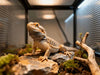
A healthy reptile habitat is about more than décor and substrate. One of the most important parts of enclosure setup is creating a proper day and night cycle with the right combination of light, UVB, and heat. When your reptile’s environment reflects the natural rhythm of day and night, it helps support normal behavior, digestion, rest, and overall health.
Why Day and Night Cycles Matter
Reptiles rely on their environment to tell them when it is time to be active and when it is time to rest. UVA Light plays a major role in regulating circadian rhythm, which is the natural 24 hour cycle that affects sleep, activity, and hormone production. When reptiles do not have a proper light cycle, it can interrupt their normal schedule and lead to stress. Creating a consistent routine with daytime lighting and nighttime darkness helps support a healthier, more natural lifestyle in captivity.

The Role of UVB Lighting
For many reptiles, UVB is a key part of daily care. Diurnal reptiles like bearded dragons, turtles, tortoises, iguanas, and chameleons need UVB exposure during the day to help them produce vitamin D3 and properly absorb calcium. Without proper UVB, reptiles can develop serious health issues such as metabolic bone disease. At the same time, UVB lighting should not be left on around the clock. These lights should be used during the day and turned off at night to help maintain a natural rhythm.
A Simple Day and Night Routine
A good general guideline for many reptiles is 12 hours of daytime light and heat, followed by 12 hours of darkness. During the day, your reptile should have access to visible light, UVB, and a proper basking area. At night, bright lights should be turned off so your pet can rest. If nighttime warmth is needed, it should come from a heat source that does not produce visable light.
Building the Right Temperature Gradient
A proper enclosure should include more than one temperature. Reptiles need a range of temperatures so they can move around and regulate their body heat naturally.
Basking Area
This is the hottest spot in the enclosure and where your reptile warms up directly under a heat source. Basking temperatures vary by species, which is why it is important to research your reptile’s natural habitat and specific needs.
Warm Side
The warm side surrounds the basking area and gives your reptile a place to stay warm without being directly under the hottest point.
Cool Side
The cool side gives your reptile a place to retreat and cool down when needed. This temperature difference across the enclosure is what creates a healthy gradient.
Night Temperature
Night temperatures should stay stable and appropriate for the species you keep. If extra warmth is needed after lights go out, use a heat source that will not disrupt your reptile’s sleep cycle.
Choosing the Right Lighting and Heating
The best setup depends on the type of reptile you keep, its age and natural environment, along with location of enclosure within your home. Desert reptiles often need stronger UVB and higher basking temperatures, while tropical and forest species may need more moderate heat and lower UVB levels. At Pets on Broadway, we carry a range of lighting and heating options to help you build a better reptile habitat.
For UVB Lighting
Arcadia lighting systems provide dependable UVB exposure across the enclosure. For desert species, Arcadia Pro T5 Desert 12% UVB Lighting Kits are designed for stronger UVB output and are available in 24 inch, 36 inch, and 48 inch sizes. For tropical and forest species, Arcadia Pro T5 Forest 6% UVB Lighting Kits provide a more moderate UVB level. For reptiles that thrive with lower UV exposure, Arcadia ShadeDweller systems such as the Pro T5 ShadeDweller 7% UVB kits, ShadeDweller Max 2.5% UVB kits, and Arboreal 2.4% UVB options are excellent choices.
For Daytime Heat
A basking lamp helps create the warm zone reptiles need during the day. We carry several daytime heating options including GoldenSun Basking Flood Infrared Heat Lamps and Repti Basking Spot Lamps in a range of wattages so you can match the output to your enclosure size and reptile species.
For Nighttime Heat
If nighttime temperatures need support, it is best to use a heat source that produces warmth without bright visible light. Options include the Nano Reptile Ceramic Heat Emitter and Repti Care Ceramic Infrared Reptile Heat Emitters in 60 watt, 100 watt, and 150 watt options. We also carry the ReptiCare Infrared Heat Projector Professional Series, which provides concentrated heat without disturbing nighttime rest.
For Supplemental Heat
Under tank heaters can help maintain warmth and support a healthy temperature gradient. The ReptiTherm U.T.H. Under Tank Heater is a popular option for enclosures that benefit from gentle bottom heat. It is important to have connected thermometer to regulate temperature to avoid overheating and underheating the enclosure.
For Fixtures and Control
The right fixture is just as important as the bulb itself. We carry Deep Dome Lamp Fixtures, Combo Deep Dome Dual Lamp Fixtures, Clamp Lamps, and Adjustable Reptile Lamp Fixture Stands to help create a safe and effective lighting setup. To help keep lighting schedules consistent, the ReptiCare Green Automatic Day & Night Cycle Terrarium Lighting Timer makes it easy to maintain a reliable routine every day.

Smart Lighting with Arcadia LumenIZE
Arcadia’s LumenIZE lighting systems make reptile lighting easier to manage and more natural for your pet. Using the LumenIZE app, you can control compatible UVB and LED lighting from your phone or tablet, allowing you to create smooth sunrise and sunset transitions instead of simple on and off lighting. The system also helps simulate natural seasonal lighting patterns while improving energy efficiency by up to about 30 percent. With built in Bluetooth control, internal memory, and water resistant fixtures designed for humid habitats, LumenIZE systems offer a convenient and reliable way to maintain consistent lighting for reptile enclosures.
Matching the Setup to Your Reptile
No two reptile species have exactly the same needs. A desert lizard, a tropical gecko, and a snake from a shaded environment will all require different UVB levels, temperatures, and enclosure layouts. Researching your reptile’s native environment is an important first step in building the right habitat.
A Better Habitat Starts with the Basics
When you create a proper day and night cycle and provide the right heat gradient, you are giving your reptile the tools it needs to thrive. Consistent lighting, species appropriate UVB exposure, and safe heating all work together to support natural behavior and long term health. If you are updating your enclosure or starting a new setup, our team at Pets on Broadway can help you choose the right lighting and heating equipment for your reptile.
Click here to shop reptile heating and lighting fixures now!